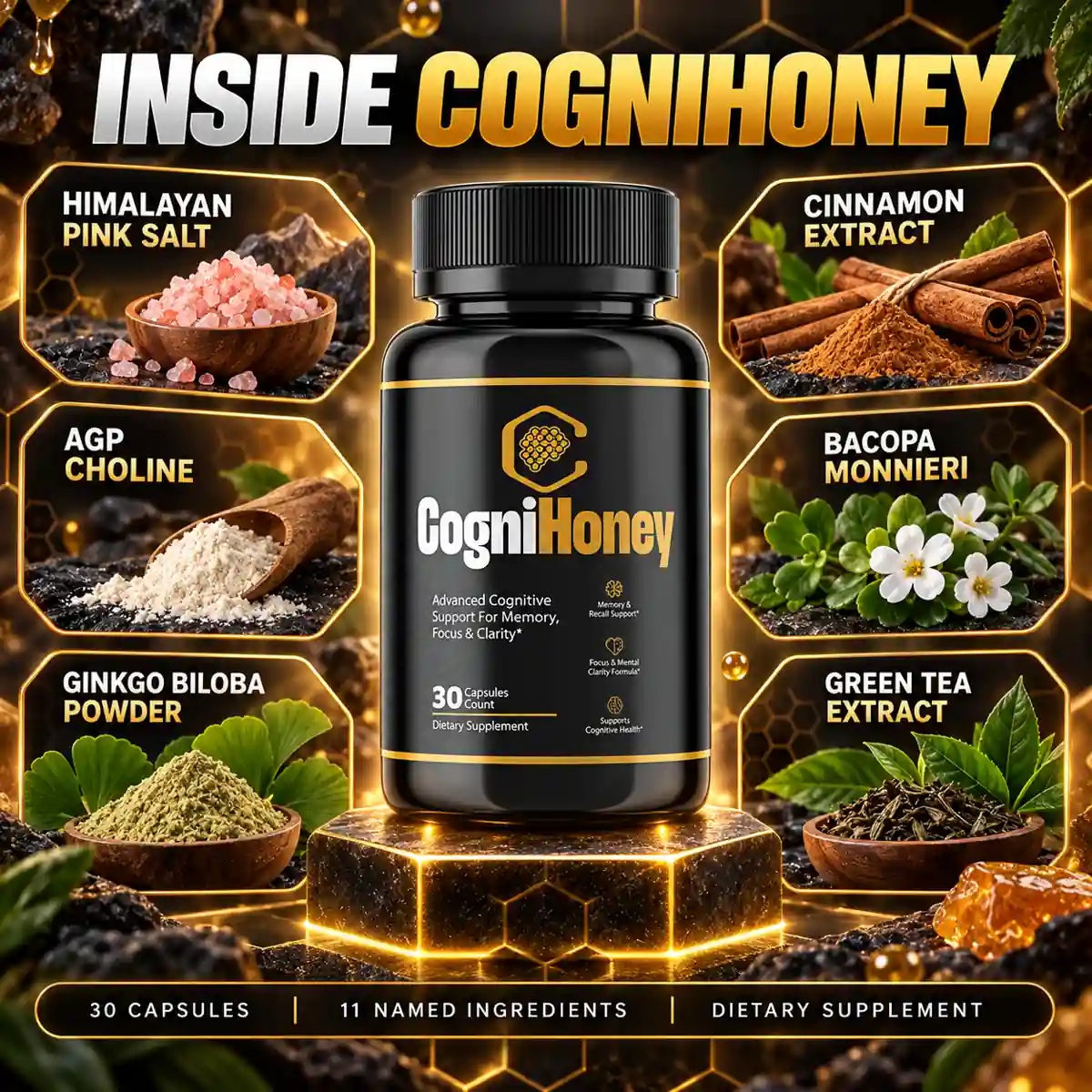
Eleven Names, Four Jobs: How The CogniHoney Formula Splits Into Groups
The formula read as four groups with four purposes, and what each group can and cannot be expected to do.
CogniHoney Official Website › Reference Guides
Two long guides and five shorter reads explain how to judge a memory supplement from its label: what the claims may say, what the ingredients were tested for, who should be careful and how long a fair trial takes. Each one uses the CogniHoney formula as its worked example and cites its sources inline, so every figure can be checked.
Below: the guides, the reads, the reference pages and where to start.
Start with one of these if you are comparing products rather than reading about one.
A checklist for the moment before you buy: the claim, the amount of each ingredient, what a percentage means, the form, the people studied, the trial length, interactions, upper limits, caffeine and the guarantee window. It ends by scoring CogniHoney against all ten, and the capsule is allowed to lose points.
The five ingredient families on the memory shelf, a nine-row table of the best evidence with the people each study enrolled, how long the research ran, and the interactions that come up most often. It closes by placing the eleven CogniHoney names in those families.
Each takes one question the CogniHoney list raises and answers it in full.
The formula read as four groups with four purposes, and what each group can and cannot be expected to do.
The macular-pigment research in healthy adults, the AREDS2 null result, and why the leaf-not-fruit detail matters.
Standardised leaf extract versus a listed powder, the near-zero meta-analysis in healthy people, and the blood-thinner interaction.
What the unusual label name means, the healthy-adult trials, and the two Korean cohort studies that point in opposite directions.
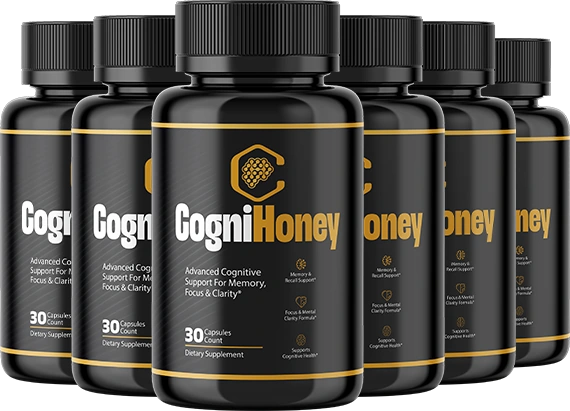
The serving direction, the three pantry names and what each is actually studied for, and USP’s green tea empty-stomach caution set beside the timing.
All five in one place
They live on the CogniHoney blog, each with its own sources, a comparison table and the date it was last reviewed.
Six pages that answer the six questions buyers ask most, each in depth.
Four common starting points and the page that answers each.
Start with the ten checks, then run both labels through them side by side.
Start with the evidence guide, then the ingredients page for the CogniHoney version of it.
Start with the safety page, and take the bottle and its panel to your prescriber.
Start with pricing and the guarantee: the pack should outlast the time you mean to give it.
The words the guides use most, in one place, in plain English.
A statement that a supplement supports a normal body function, such as memory. It needs the FDA disclaimer and may not claim to treat a disease.
The box on the label that must give the serving size and the amount per serving of each dietary ingredient.
A percentage giving the share of a marker compound in a raw material. It describes concentration, not the amount in a capsule.
An extract is concentrated from the plant; a powder is the dried, ground plant. Trials usually test a specific extract.
A study that pools the results of several trials. Only as good as the trials it pools.
People are assigned by chance to the ingredient or a placebo, ideally without knowing which. The workhorse of this field.
Researchers follow people who chose to take something. It can show a link, not prove a cause.
The most of a nutrient a day, from all sources, that is unlikely to cause harm. Vitamin B6 has one; B12 does not.
The code tying a bottle to one production run, usually printed on the base or the neck of the bottle.
A laboratory report on a batch, checked against the product’s own specification. Identified by its own reference.
Where the figures in the guides and reads come from.
The mix is deliberate. For a nutrient the right primary source is the NIH fact sheet, for a herb the NCCIH page, for a trial the PubMed record and for a labelling rule the eCFR or the FDA. A reference list padded with weaker copies of the same facts would look longer and be worth less.
Three rules that make a figure on these pages checkable in minutes.
They are published by Cognihhoney, which sells CogniHoney and earns on orders. The guides apply the same checks to CogniHoney as to any label, and it loses points where the evidence is thin.
Yes. They are written for any memory supplement label, and the questions at the end of the checklist guide work for any seller.
Each page carries its review date. These were last reviewed in September 2026, and a correction moves the date forward.
Four claims about these pages that a sceptical reader can check in ten minutes.
The eleven names, the four percentages, the capsule count and the serving direction come from the product artwork and the seller’s own list. Prices, the guarantee and the refund steps come from the seller’s terms for this desk.
Headed “What published studies used”, beside a column showing what the list gives. No sentence here moves a number from the first into the second.
Where a study was run in people with a diagnosis, the sentence says so and the result is not carried across to a healthy reader.
Write to contact@Cognihhoney.com and the correction is made on the page itself, with the review date moved forward.
Cognihhoney is the USA Authorized CogniHoney Retailer and this website makes money on orders placed through it. That is why the unflattering parts are here too: the ingredients with thin evidence, the three-star review, and the plain statement that CogniHoney is not a treatment for anything. Tracking, changes and refunds go through +1 (302) 200-3480; orders go through the checkout only.
Two capsules a day, fifteen days a bottle, and sixty days from purchase to change your mind.
$49 to $79 a bottle · two capsules a day, fifteen days a bottle · 60 days from purchase to change your mind
Order CogniHoney On The Official WebsiteLot COG-26/CO-7691 · checkout on the seller’s secure page