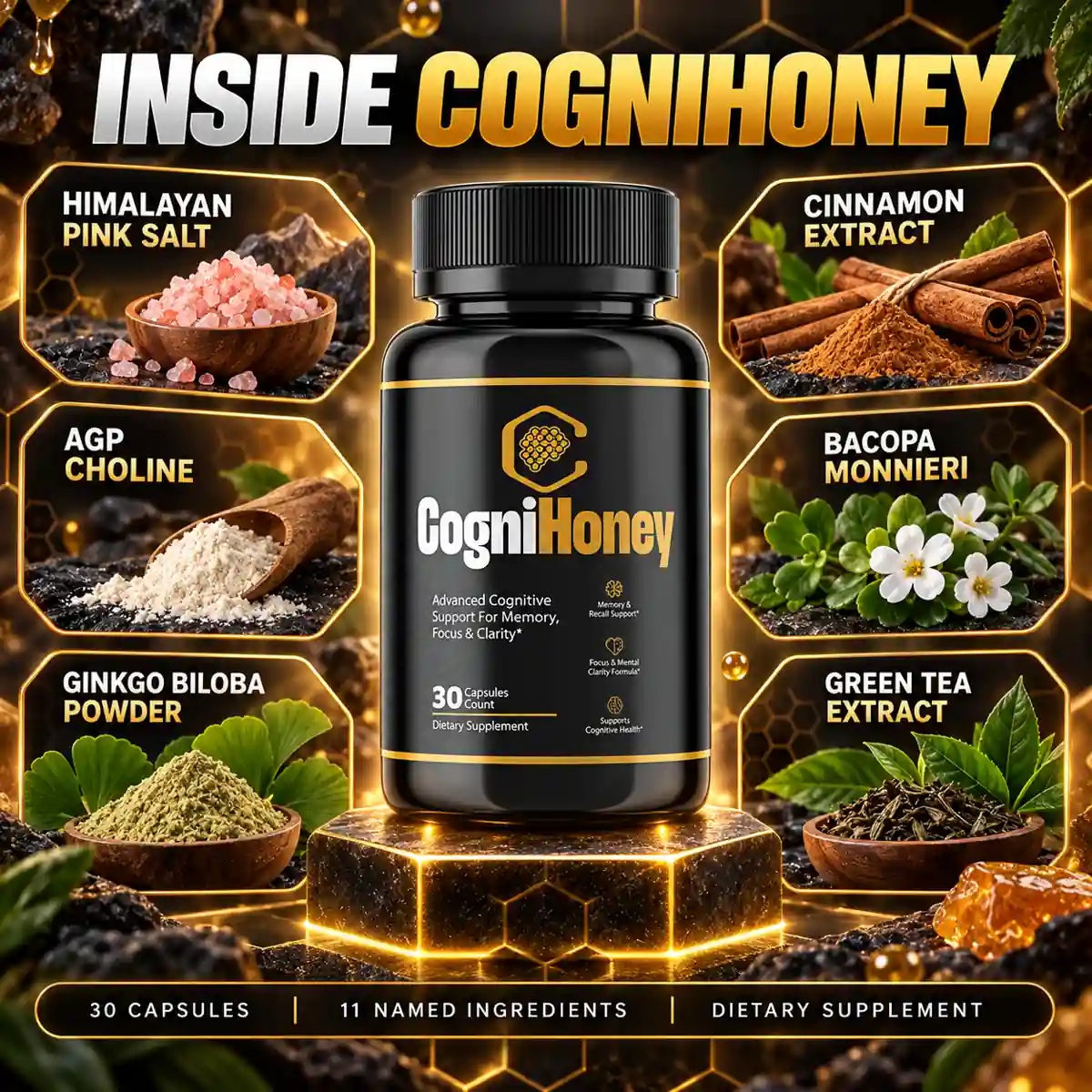
Eleven Names, Four Jobs: How The CogniHoney Formula Splits Into Groups
The formula read as four groups with four purposes, and what each group can and cannot be expected to do.
CogniHoney Official Website › Blog
Five long reads on the CogniHoney formula, each taking one question its list raises: how the eleven names split into four groups, why a memory capsule carries eye nutrients, why ginkgo powder is not ginkgo extract, what AGP choline is, and how the serving direction sits beside a green tea caution. Every read cites its sources inline and names the people each study enrolled.
Below: the five reads, the questions they answer, and a reading order.
Each read is between 1,500 and 2,000 words, with a comparison table, its own sources and the date it was last reviewed.
The formula read as four groups with four purposes, and what each group can and cannot be expected to do.
The macular-pigment research in healthy adults, the AREDS2 null result, and why the leaf-not-fruit detail matters.
Standardised leaf extract versus a listed powder, the near-zero meta-analysis in healthy people, and the blood-thinner interaction.
One channel, three packs and one phone line for after the order. What to check before you pay and when the parcel arrives.
One number for tracking, changes and refunds, one email for these pages, and the order ID that every call starts from.
What the unusual label name means, the healthy-adult trials, and the two Korean cohort studies that point in opposite directions.
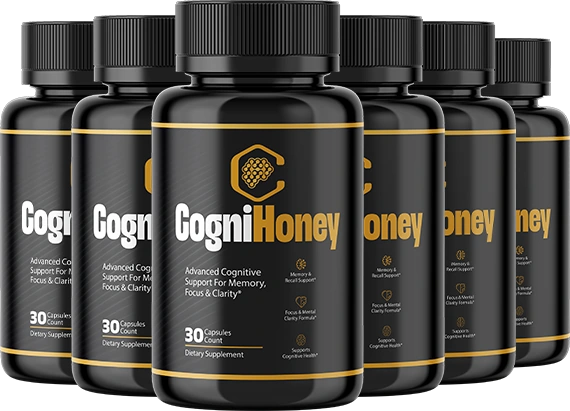
The serving direction, the three pantry names and what each is actually studied for, and USP’s green tea empty-stomach caution set beside the timing.
Written for a buyer with the bottle in hand
Or about to have one. Each read ends with the questions worth asking of the panel, and none of them asks you to take a figure on trust: the source for every number is one click away, and the people each study enrolled are named beside the result.
Five questions buyers ask most about the CogniHoney list, one read each.
| Your question | The read that answers it |
|---|---|
| Why are there eleven ingredients, and which ones matter most? | Eleven Names, Four Jobs |
| Why does a memory capsule contain eye nutrients? | Eye Nutrients In A Memory Capsule |
| Does ginkgo work, and does the form matter? | Ginkgo Powder Or Extract |
| What is AGP choline, and is it safe? | AGP Choline, Three Names |
| Why before the largest meal, and what about green tea? | Before Your Largest Meal |
Each read also links to the reference pages behind it, such as ingredients and safety.
Every name on the list has a home in at least one read. Bacopa, B6 and B12 are covered in the four-groups read; the rest have reads of their own.
| Ingredient, as listed | Group | Covered in |
|---|---|---|
| Himalayan pink salt | Pantry trio | Before Your Largest Meal |
| Cinnamon extract | Pantry trio | Before Your Largest Meal |
| AGP choline | Memory and focus core | AGP Choline, Three Names |
| Bacopa monnieri (20%) | Memory and focus core | Eleven Names, Four Jobs |
| Lutein (5%) | Eye-nutrient trio | Eye Nutrients In A Memory Capsule |
| Bilberry leaf powder | Eye-nutrient trio | Eye Nutrients In A Memory Capsule |
| Vitamin B6 | Two B vitamins | Eleven Names, Four Jobs |
| Ginkgo biloba powder | Memory and focus core | Ginkgo Powder Or Extract |
| Vitamin B12 | Two B vitamins | Eleven Names, Four Jobs |
| Zeaxanthin (5%) | Eye-nutrient trio | Eye Nutrients In A Memory Capsule |
| Green tea extract (50%) | Pantry trio | Before Your Largest Meal |
In the seller’s list order. The four percentages are standardisation figures, not amounts; the supplement facts page explains them.
The reads are about the formula. Buying, returning and what buyers reported each have a page of their own.
Four steps that take about forty minutes in all.
It maps all eleven names and tells you which three carry the memory claims, so the other four reads have somewhere to sit.
Read the ginkgo post and the AGP choline post together. Between them they cover two of the three names closest to the label’s claims.
The carotenoid research runs on a longer clock than the rest, and the post explains why a year is the relevant unit.
The serving direction, the pantry names and the green tea caution: the practical read, best taken last.
Four rules that make every figure in the five reads checkable in a few minutes, by anyone with the link.
Every study is linked to its PubMed record, and every regulator fact to the NIH, NCCIH or FDA page it comes from. Four to six sources per read.
A result from older adults, from people at risk of an eye condition or from people with a diagnosis is cited with that population named.
A dose from a trial is never written as the amount in a CogniHoney capsule. The capsule’s own amounts are on the panel of the bottle you receive.
Every read ends with the same note: a supplement, not a treatment, and a change in memory is a reason to be assessed.
The CogniHoney Team, from the Cognihhoney Editorial Desk. The same rules apply as on every other page: sources linked inline, research amounts kept apart from the capsule, and the people studied named.
This website earns when you buy, and each post says what the evidence says, including where it is thin: ginkgo near zero in healthy people, a large null trial for the eye nutrients, two cohorts pointing opposite ways for AGP choline.
The four-groups read. It maps all eleven names, says which three sit closest to the label’s claims, and points to the other four reads for the detail on each group.
Each read names the cautions that belong to its ingredients, such as ginkgo with blood thinners and green tea extract with an empty stomach. The safety page brings every named interaction together.
No. The seller’s list gives no milligram amounts, so every amount in the posts is a research figure, labelled as one. The panel on the bottle you receive gives the capsule’s own amounts.
Each post shows its last-updated date. These were last reviewed on September 21, 2026, and a correction moves the date forward.
Four claims about these pages that a sceptical reader can check in ten minutes.
The eleven names, the four percentages, the capsule count and the serving direction come from the product artwork and the seller’s own list. Prices, the guarantee and the refund steps come from the seller’s terms for this desk.
Headed “What published studies used”, beside a column showing what the list gives. No sentence here moves a number from the first into the second.
Where a study was run in people with a diagnosis, the sentence says so and the result is not carried across to a healthy reader.
Write to contact@Cognihhoney.com and the correction is made on the page itself, with the review date moved forward.
Cognihhoney is the USA Authorized CogniHoney Retailer and this website makes money on orders placed through it. That is why the unflattering parts are here too: the ingredients with thin evidence, the three-star review, and the plain statement that CogniHoney is not a treatment for anything. Tracking, changes and refunds go through +1 (302) 200-3480; orders go through the checkout only.
Two capsules a day before your largest meal, fifteen days a bottle, and sixty days from purchase to change your mind.
$49 to $79 a bottle · two capsules a day, fifteen days a bottle · 60 days from purchase to change your mind
Order CogniHoney On The Official WebsiteLot COG-26/CO-7691 · checkout on the seller’s secure page